Season tracker · Mon 26 Oct 2026
Autumn Leaves Forecast 2026: the tracker
The 2026 autumn colour season, tracked city by city: the latest forecast for red maples and yellow ginkgoes, how far each date sits from its long run average, and where to go as the colour moves south.
Forecast status, 26 October 2026: the Japan Meteorological Corporation's second forecast, published on 1 October, is the latest national city table. Weathernews added its second spot forecast on 8 October and plans a third in late October. The Japan Weather Association updated its spot forecast on 14 October and will keep updating it through November. The next national checkpoint is the Japan Meteorological Corporation's adjustment in early November. This page follows each round.
Autumn colour runs the blossom season in reverse. It begins on cold northern mountains in September, descends to the lowlands and then works south for almost three months. By the time Kyoto's maple reaches the forecast date in December, Hokkaido's mountain season is finished and Sapporo's lowland colour is a memory. The trick is not finding one national week. It is standing on the right rung of the ladder on your dates.
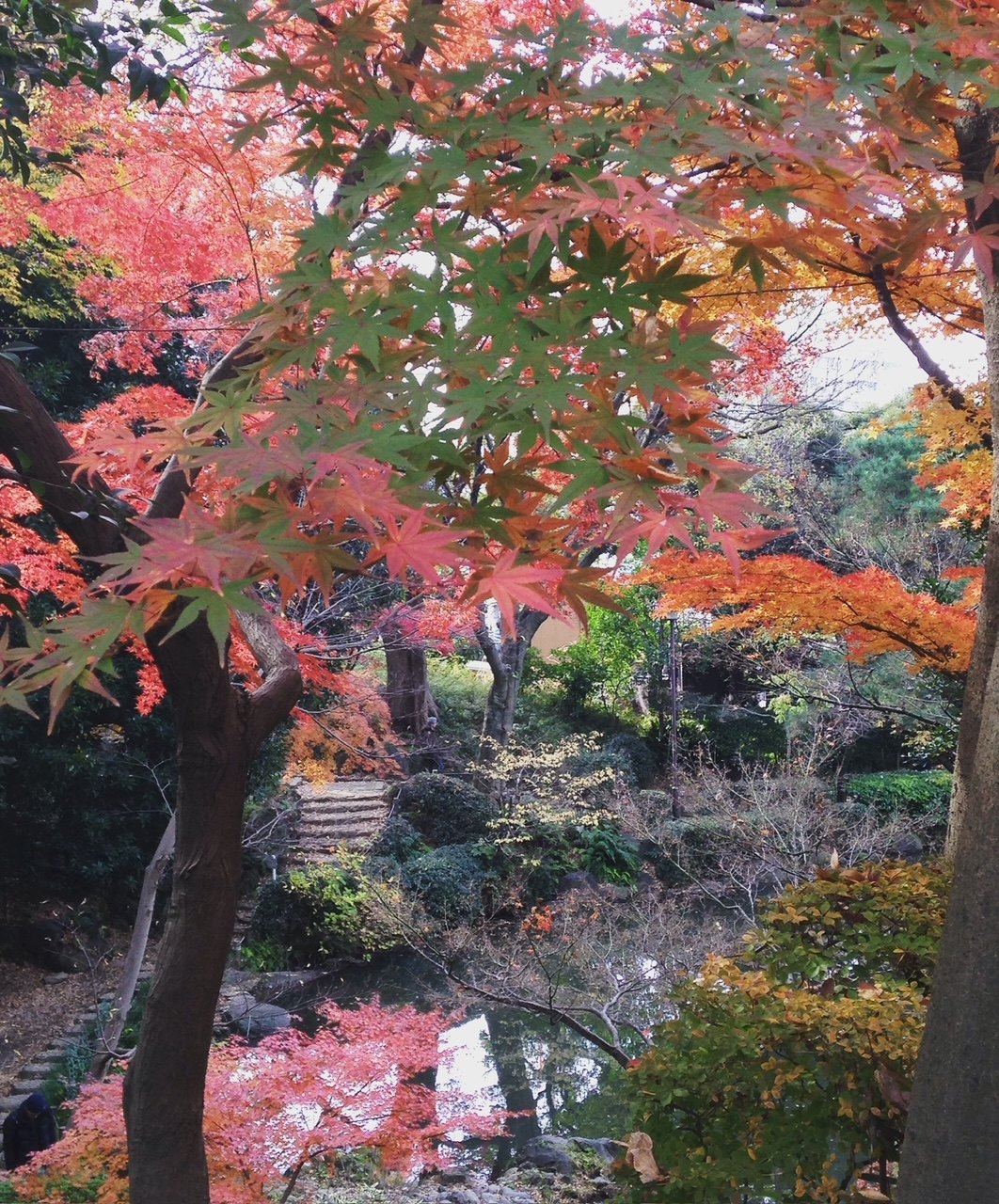
The 2026 forecast, city by city
The Japan Meteorological Corporation, or JMC, forecasts two colours separately. Red is the maple date. Yellow is the ginkgo date. The averages are the long run dates published beside the 2026 forecast, and the gap between the two columns is the story of this year: most red dates are close to their averages, a few are notably late, and Kagoshima is the one city where red is forecast early.
| City | Red, 2026 forecast | Red, average | Yellow, 2026 forecast | Yellow, average |
|---|---|---|---|---|
| Sapporo | 4 November | 28 October | 3 November | 4 November |
| Aomori | 13 November | 13 November | 5 November | 2 November |
| Sendai | 24 November | 21 November | 29 November | 23 November |
| Tokyo | 28 November | 28 November | 26 November | 23 November |
| Kanazawa | 30 November | 24 November | See the note below | 10 November |
| Nagano | 21 November | 12 November | 14 November | 10 November |
| Nagoya | 2 December | 28 November | 17 November | 18 November |
| Kyoto | 11 December | 5 December | 27 November | 24 November |
| Osaka | 4 December | 1 December | 24 November | 22 November |
| Wakayama | 12 December | 6 December | 26 November | 23 November |
| Hiroshima | 28 November | 22 November | 21 November | 15 November |
| Kochi | 9 December | 2 December | 16 November | 15 November |
| Fukuoka | 7 December | 1 December | 28 November | 20 November |
| Kagoshima | 10 December | 15 December | 27 November | 25 November |
One cell is disputed. In the table JMC published on 1 October, Kanazawa's ginkgo forecast is printed as 26 October, fifteen days ahead of its average. That contradicts JMC's own summary for eastern Japan, JMC's first forecast and every full reproduction of the table, all of which give 10 November, level with the average. We read the printed 26 October as an error in JMC's table, and we will correct this page when JMC's next forecast lands in early November. Until then, plan Kanazawa's ginkgoes around the average, 10 November.
Three red dates stand out. Sapporo is seven days behind its average, Nagano nine days behind and Kyoto six. Tokyo is exactly on its average, which makes late November the clearest anchor in the table. At the other end, the sequence runs Nagoya on 2 December, Osaka on 4 December, Fukuoka on 7 December, Kochi on 9 December, Kagoshima on 10 December, Kyoto on 11 December and Wakayama on 12 December. A traveller with flexible dates can follow the red front south through the first half of December.
The yellow dates tell a different story. Ginkgoes often turn before the maples around them, by almost three weeks in Nagoya and Kochi on this forecast. In Sendai the order reverses, with red on 24 November and yellow on 29 November. Read the two columns as two fronts moving through the same city, not as a single date with a margin of error.
How to read a forecast date
A JMC date is not a promise that every tree in a city peaks that morning. JMC uses the Japan Meteorological Agency's sample tree standard and estimates the first day on which most of that tree's leaves have turned red or yellow. It counts that day as the start of best viewing. Good viewing runs around it and after it, for as long as the weather leaves the colour on the branches. Wind, heavy rain and a sudden warm spell can shorten the show; calm, cold nights can stretch it.
The tree matters too. Most red forecasts follow an iroha maple, while Hokkaido uses mountain maple species that grow there. The yellow forecast follows a ginkgo. JMC explains that ginkgoes begin colouring at a slightly warmer temperature than maples, which is why the yellow front often goes first. A city sample tree also sits in one place at one altitude. A hillside temple, a shaded gorge and a park two streets away can all run on different clocks.
That is why the specialist forecasts do not always agree. Weathernews forecasts individual spots and defines the best period as running from roughly 70 percent colour until the leaves begin to fall. The Japan Weather Association forecasts named spots and updates its colour reporting through the season. JMC gives the cleanest city comparison. Use JMC to choose the region and the week, then use a spot forecast or the venue itself when choosing the day.
Why the colour moves north to south, and downhill
Leaves turn as autumn temperatures fall. The cold arrives first in Hokkaido and at altitude, so the front starts on northern mountains and descends slope by slope before it crosses the lowlands. JMC's regional outlook puts northern mountain colour from late September to mid November and northern lowlands from mid October to late November. In eastern and western Japan, the mountains run from late October into early December, while the plains concentrate from late November to mid December.
The season is therefore longer than a single peak week. September belongs to the high north. October belongs to Hokkaido, Tohoku and the Alps. November brings the famous central Honshu spots into play. December is not too late: it is the main month for the city maples of Nagoya, Osaka and Kyoto, and for the last red dates in Shikoku and Kyushu.
Where to go, and when
Late October: climb. The reliable colour is still in the mountains and the north. Our calendar's Nikko season frames the pattern in one town: the high lakes and Irohazaka come first, and the shrine woods lower down run into November. Mount Takao's festival also opens outside Tokyo, but its maples are normally a later act, from mid November into early December.
Early to mid November: the front reaches the cities of the north and the central mountains. Sapporo's red date is 4 November and Aomori's is 13 November, though the surrounding mountains will be ahead of both. Korankei's maple festival fills November, and the Fuji-Kawaguchiko festival runs from 7 to 29 November around Lake Kawaguchi's Maple Corridor. This is the broadest choice of the season: north, mountains and the first great festival towns are all live at once.
Late November: the classic route switches on. Sendai and Hiroshima reach their red dates on 28 November, the same day as Tokyo. Kanazawa follows on 30 November. In Kyoto, Eikando's autumn programme is already under way, with its maple illumination running into December, while Osaka's Minoo Maple Festival carries the gorge path through the same turn of the month. If you have one week for Tokyo, Kyoto and the cities between them, this is the week the forecast supports most strongly.
Early to mid December: go south and west. Nagoya, Osaka and Fukuoka come first, then Kochi and Kagoshima, with Kyoto's city maple on 11 December and Wakayama's on 12 December. Do not read Kyoto's late benchmark as a reason to arrive on 11 December and hope. Its temples and hillsides spread across weeks, and Eikando's programme ends on 6 December. Use the city date as the tail of the Kyoto season, not its opening day. By mid December Hokkaido is done, most mountain colour has fallen, and the remaining show belongs to the warmer lowlands.
Autumn colour on the calendar
Eight autumn listings from our calendar sit under this forecast, from Nikko's long altitude ladder to the ten night light up at Ritsurin Garden. Each carries the date label used on its own event page: confirmed where the organiser has published the 2026 dates, tentative where the season is framed from the organiser's pattern and the final peak remains forecast led.
- Sat 03 Oct to Tue 17 Nov 2026 Nikko Autumn Leaves Season Nikko Tentative date
- Sat 24 Oct to Sun 13 Dec 2026 Mount Takao Autumn Leaves Festival Hachioji Confirmed dates
- Thu 29 Oct to Sun 29 Nov 2026 Showa Kinen Park Autumn Leaves Festival and Night Walk Tachikawa Confirmed dates
- Sun 01 to Mon 30 Nov 2026 Korankei Momiji Matsuri Toyota Confirmed dates
- Sat 07 to Sun 29 Nov 2026 Fuji-Kawaguchiko Autumn Leaves Festival Fujikawaguchiko Confirmed dates
- Wed 11 Nov to Sun 06 Dec 2026 Eikando Autumn Exhibition and Maple Illumination Kyoto Confirmed dates
- Sat 14 Nov to Sun 06 Dec 2026 Minoo Maple Festival (Meiji no Mori Minoh Quasi-National Park) Minoo (Minoh) Confirmed dates
- Fri 20 to Sun 29 Nov 2026 Ritsurin Garden Autumn Light-up 2026 Takamatsu Confirmed dates
Nikko is the early lesson in altitude: Ryuzu Falls and Lake Yunoko lead, Lake Chuzenji and Irohazaka follow, and the World Heritage shrines come last. Tokyo has two different scales of autumn in the list, Mount Takao's mountain festival and Showa Kinen Park's ginkgo avenues and night walk. Korankei brings around 4,000 maples into one gorge, lit through November, while the Maple Corridor at Kawaguchiko pairs the colour with Mount Fuji across the lake.
The late season has its own rewards. Eikando holds about 3,000 maples and lights them at night from 20 November to 6 December. Minoo lights the path to its waterfall, and Ritsurin Garden reflects its maples and Mount Shiun in the ponds. The full collection is on the autumn colour season page, and the spring counterpart to this page is the Cherry Blossom Forecast 2027 tracker.
What happens next
- Late October 2026 Weathernews, third forecast A spot by spot update for around 1,200 places, useful once a town or temple is chosen.
- Early November 2026 Japan Meteorological Corporation, next forecast The next national city table, covering around 700 viewing places and the mountains by altitude.
- Through November 2026 Japan Weather Association, tenki.jp updates Three to four forecast updates in total, with daily commentary as the colour moves.
Book around a window, not a day. Give a city at least three nights when the leaves are the point of the stay, keep one nearby mountain or lowland alternative in reserve, and aim to arrive just before the forecast date rather than after it. If your route can run north to south, the front will do the work. The trip planner can lay the autumn events against your dates, and this tracker will change at each forecast round.
Forecast table and method: Japan Meteorological Corporation, 2026 Autumn Foliage Forecast, second forecast, 1 October 2026. Update pattern: Japan Meteorological Corporation; Weathernews, second autumn foliage forecast, 8 October 2026; Japan Weather Association, 2026 Autumn Foliage Peak Viewing Forecast, first released 1 October and updated 14 October 2026. Event dates and details: the Japan What's On calendar records named in the list.
More reading on the articles page, or go straight to the events calendar.