Guides · Tue 27 Oct 2026
Luggage forwarding in Japan: who to use, and what it costs
Send the suitcase ahead and ride the train with a daypack. The companies that forward bags between cities, hotels and airports in Japan, the real prices by bag size from Tokyo to Kyoto and Osaka, and the deadlines that decide whether the bag beats you there.
The short answer: Japan's parcel networks will move a suitcase from almost any hotel to almost any other, and between addresses and airports, for less than a taxi ride across town. The default service is Yamato Transport's TA-Q-BIN, the black cat vans: a large checked suitcase, size 160 and up to 25 kg, sent from Tokyo to Kyoto or Osaka costs 3,160 yen (about US$20) and arrives the next day. Nothing needs booking in advance. Hand the bag to your hotel front desk, fill in one paper waybill, and travel with a daypack while the case rides the truck network. The airports add their own counters, plus two same-day services, JAL's and Sagawa's, for arrivals who want the bag at the hotel that evening.
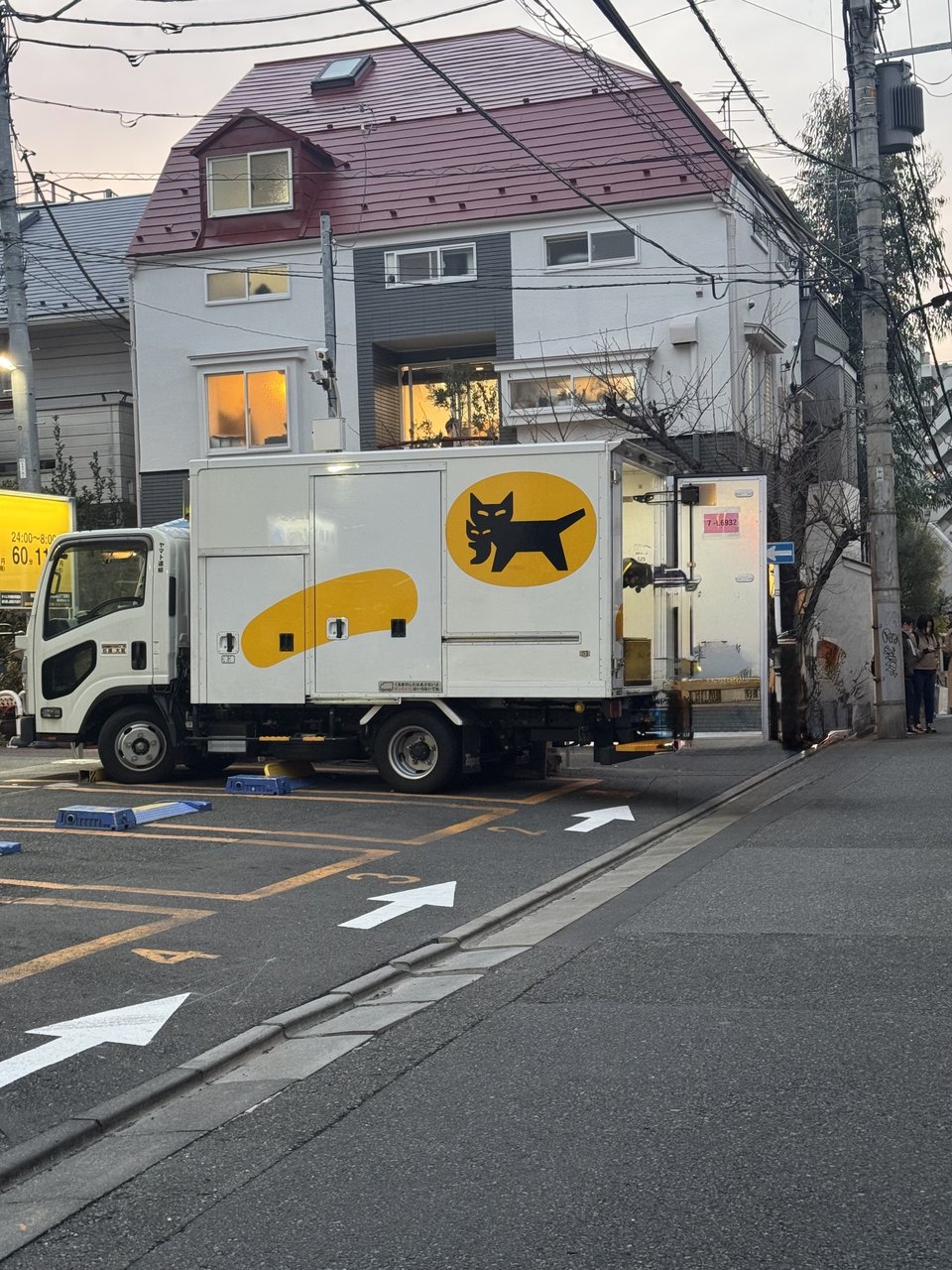
The default: Yamato TA-Q-BIN
TA-Q-BIN is the service the whole country uses, run by Yamato Transport under the black cat logo, and luggage is ordinary cargo on it: hotel to hotel, hotel to airport, home to anywhere. The price is set by two things only, the size of the bag and the distance it travels. Size means the total of length, width and height in centimetres, checked against a weight limit for each size; if the bag breaks either limit it is charged at the larger size. The ceiling is size 200 and 30 kg, with no single side over 170 cm. The table is Yamato's cash price, tax included, for the route travellers ask about most.
| Size | Total dimensions | Max weight | Tokyo to Kyoto or Osaka |
|---|---|---|---|
| 60 | Up to 60 cm | 2 kg | 1,060 yen (about US$7) |
| 80 | Up to 80 cm | 5 kg | 1,350 yen (about US$9) |
| 100 | Up to 100 cm | 10 kg | 1,650 yen (about US$10) |
| 120 | Up to 120 cm | 15 kg | 2,170 yen (about US$14) |
| 140 | Up to 140 cm | 20 kg | 2,780 yen (about US$18) |
| 160 | Up to 160 cm | 25 kg | 3,160 yen (about US$20) |
| 180 | Up to 180 cm | 30 kg | 4,480 yen (about US$28) |
| 200 | Up to 200 cm | 30 kg | 5,410 yen (about US$34) |
US dollar figures are approximate, converted at ¥158 to the dollar (October 2026).
Most airline checked bags land between size 120 and size 160, which is why the honest planning figure for a big suitcase on a long hop is about 3,000 yen (about US$19). Paying cashless trims a few yen off each price. Distance moves the fare in steps: the same size 160 case costs 3,630 yen (about US$23) from Tokyo to Sapporo and 4,680 yen (about US$30) from Tokyo to Okinawa, while a bag that stays inside Tokyo pays the same-prefecture rate, 2,410 yen (about US$15) at size 160. Two discounts are worth knowing: dropping the bag off yourself at a Yamato office, a convenience store or another TA-Q-BIN agent takes 100 yen (about US$1) off, and when two or more parcels go to the same address at the same time, each additional parcel is 100 yen (about US$1) less, though that second discount leaves out suitcases at size 160 and above.
Timing is the other half of the service. Standard TA-Q-BIN delivers the next day almost anywhere in Japan, with Okinawa and some island and mountain areas taking two days, in Yamato's own summary. The waybill lets you name the delivery date and a time band, a morning slot or a two-hour window later in the day, at no extra charge. That is what makes hotel hopping work: send the case the day before you move, name the day you arrive at the next hotel, and it is there when you check in.
Plan ahead: it is efficient, not instant. The system runs on next-day delivery, so the habit to build is sending the bag the day before you move, not on the morning you check out. Hand a case over on the day you travel and it will usually arrive the day after you do, which is fine when the next hotel is a two night stop and a nuisance when it is one. The only same-day routes are the airport counters in the section below, and they serve arrivals, not hotel to hotel moves. Treat forwarding as part of the itinerary, settled the night before, and it feels effortless; treat it as a last minute fix and it will feel a day slow.
How to send, step by step
At the hotel desk. This is the route most visitors use, because the desk does the hard part. Front desks keep the waybills, will write out the destination hotel's Japanese address for you, measure and weigh the case, and take the payment. Two details matter: the delivery date you want, and the name the next room is booked under. The name on the waybill has to match the hotel reservation, or the receiving hotel may not accept the bag.
The waybill. One form per bag: the recipient's name, address and phone number, your own details, the delivery date and time band, and a plain description of the contents. Yamato asks for a detailed description, and a vague one can slow the parcel down. Keep the sender's copy of the form. It carries the tracking number, and it is the receipt you hand over when you collect a bag from an airport counter.
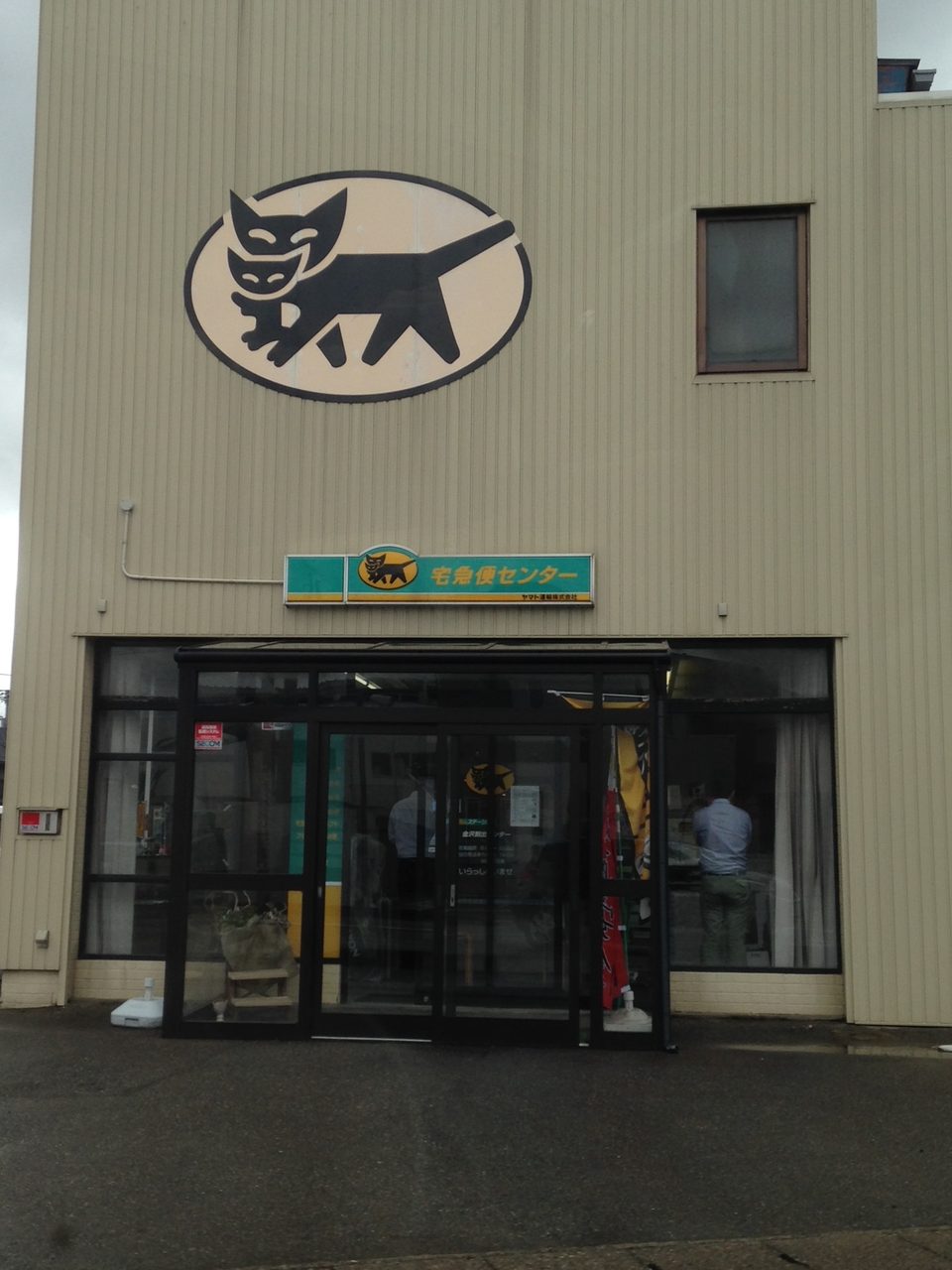
Other places to hand a bag over. Yamato's own centres, under the same black cat sign, and TA-Q-BIN agents across the country, convenience stores included, take parcels the same way, with waybills on the counter. Two cautions: the largest size, 200, cannot be sent from some convenience stores, and every drop-off point has its own cut-off for same-day dispatch, so a bag handed over in the evening may not move until the next day. A Yamato driver can also collect from an address, booked by phone or online, which suits stays without a front desk.
Receiving at the other end. Hotels hold forwarded bags as a matter of routine, and yours will usually be in the room or waiting at the desk. The gap in the system is unstaffed addresses: a private rental or small guesthouse with nobody on site often cannot accept a delivery at all. The fallback is built into the waybill: address the bag to a Yamato centre near where you are staying, the Sales Office Pickup Service, and collect it yourself with photo ID.
Airports: bags to and from the plane
To the airport: Airport TA-Q-BIN. Any TA-Q-BIN parcel can be addressed to a pickup counter at the major airports, at the ordinary fare for the route plus an airport handling fee of 660 yen (about US$4). The discipline is the deadline: the bag has to be sent by two days before your departure date, three days in some areas, and it is then waiting at the counter on the day, collected against the sender's receipt. Round Trip TA-Q-BIN sends a bag out to the airport and brings it home again afterwards on the one waybill; from 1 November 2026 the return-leg airport fee at Kansai is waived, halving that round trip fee to 660 yen (about US$4).
From the airport: JAL ABC. The counters in the arrivals halls at Narita, Haneda and the other big airports run the standard airport delivery service. From Narita or Haneda, a 160 cm bag delivered to an address in the Kanto region, Tokyo included, costs 2,820 yen (about US$18), and to an address in Kansai 2,960 yen (about US$19), arriving the next day. In the return direction, collected from an address in the Tokyo area and delivered to Narita or Haneda, the same size costs 3,580 yen (about US$23). The standard service takes bags up to 160 cm and 30 kg; anything bigger travels on a separate oversized service arranged by phone.
Same day from the airport. Two services close the gap between landing and the first night. Japan Airlines' Same-day Delivery Service, run from the JAL ABC counters in the arrival lobbies at Haneda, Narita and Kansai, charges a flat 4,500 yen (about US$28) per bag, delivers to hotels only, takes bags up to 180 cm and 30 kg, and is open to every arriving passenger, whichever airline they flew. Sagawa Express runs the budget version from its Hands-Free Travel counters: at Haneda Terminal 2, drop a bag by 1 p.m. and it reaches a hotel in Tokyo's ten central wards, or in Urayasu by the Disney resorts, from 4 p.m. the same day, at 910 yen (about US$6) for the smallest size rising to 2,440 yen (about US$15) at 160 cm. Sagawa runs counters at Narita on the same pattern.
Which service, when
| Service | Worked example | Speed | Hand it over at | Bag limit |
|---|---|---|---|---|
| Yamato TA-Q-BIN | 3,160 yen (about US$20), size 160, Tokyo to Osaka | Next day; two days to Okinawa | Hotel desk, convenience store, Yamato centre | 200 cm and 30 kg |
| JAL ABC airport delivery | 2,820 yen (about US$18), 160 cm, Narita or Haneda to a Tokyo address | Next day | Airport arrivals counter | 160 cm and 30 kg on the standard service |
| JAL same-day delivery | 4,500 yen (about US$28) flat per bag | Same day, to the hotel | JAL ABC counter at Haneda, Narita or Kansai | 180 cm and 30 kg; hotels only |
| Sagawa hands-free same-day | 2,440 yen (about US$15) at 160 cm, from Haneda Terminal 2 | Same day; drop by 1 p.m. | Sagawa counter, Haneda Terminal 2 and Narita | 160 cm and 30 kg |
What cannot go in the bag
Yamato's prohibited list settles what stays in your hand luggage: cash, bank and credit cards, passports and other documents that are difficult to replace, and anything flammable. A parcel whose contents total more than 300,000 yen (about US$1,900) cannot be sent at all, which is also the limit of the cover each parcel carries. On the routes that fly, to and from Okinawa and between Hokkaido and the south of the country, aviation rules add their own list: aerosols, perfume and lighters are barred, and so are lithium batteries, so power banks and spare batteries travel in the cabin bag, which is where the airlines want them anyway.
Or carry it: the shinkansen rule
Forwarding is a choice, not a requirement, and most suitcases can simply ride the train with you. The line is drawn at the same measurement the couriers use. A bag totalling 160 cm or less goes in the overhead rack with no formality. Between 160 and 250 cm, on the Tokaido, Sanyo and Kyushu shinkansen, the bag counts as oversized and needs a seat with oversized baggage space, reserved when you book; board with one and no reservation and there is a 1,000 yen (about US$6) fee. Over 250 cm the bag cannot board at all. Note the gap between the two systems: the trains accept bags up to 250 cm, the couriers stop at 200 cm and 30 kg, so the truly enormous case has exactly one route, the reserved seat. Our shinkansen, line by line and the rail pass guide cover the trains themselves.
Buy the Japan Rail Passvia Klook · affiliate link
For the wider picture, getting there covers the airports and the first trains into town, our guide to taxis from Tokyo's airports prices the door to door alternative for the airport leg, and the practical page rounds up the rest of the arrival small print.
Sources: Yamato Transport, TA-Q-BIN rate table (revised 1 October 2025; cash fares, tax included), size chart and how to measure a parcel, Airport TA-Q-BIN page (airport handling fee 660 yen (about US$4), send by two days before departure and three in some areas, Kansai round trip fee change from 1 November 2026), dangerous and prohibited items list, and English FAQ on delivery times (next day or two days; same-day delivery only at designated counters); JAL ABC, baggage delivery fee chart (160 cm from Narita and Haneda: 2,820 yen (about US$18) to the Kanto region, 2,960 yen (about US$19) to Kansai, 3,580 yen (about US$23) from the Tokyo area to the airport); Japan Airlines, Same-day Delivery Service (4,500 yen (about US$28) per bag, counters at Haneda, Narita and Kansai, hotels only, up to 180 cm and 30 kg); Sagawa Express, SAGAWA Hands-Free Travel, Haneda Airport Terminal 2 counter (same-day hotel delivery charges and the 1 p.m. drop-off deadline); JR Central, oversized baggage rules for the Tokaido Shinkansen. Checked 26 and 27 October 2026. Fares change; the counter's measurement of your bag and the rate on the day are the final word.
More reading on the articles page, or go straight to the events calendar.