
Event guide · Sun 08 Nov 2026
The Kyushu sumo tournament without a ticket: how to follow all fifteen days from Fukuoka
The Kyushu Basho runs from Sunday 8 to Sunday 22 November 2026 at the Fukuoka Kokusai Center, and every official ticket is sold. This is the deep dive companion to our first timer's guide and our Fukuoka weekend guide: how a tournament day actually works, where to watch the bouts on television and in the city, how to see wrestlers around Hakata without a seat, what to eat, and the 2027 calendar for the next time you plan to be inside the hall.
Start with the plain fact, because everything in this guide hangs off it: the Kyushu Grand Sumo Tournament is sold out. The Japan Sumo Association's official sale for all fifteen days, Sunday 8 to Sunday 22 November 2026 at the Fukuoka Kokusai Center, has gone, and the association sells no tickets at the venue on the day. We will not point you at resale listings or unofficial sellers, and you should be suspicious of anyone who does: in a sold out year the markups are steep and the association's own terms treat tickets resold for profit as not valid. Our first timer's guide to the tournament covers seats and prices for a normal year. This guide is about the other thing, the thing most of Fukuoka actually does: following the tournament properly without a seat, in the city where it is happening.
The fifteen days at a glance
The Kyushu Basho is the sixth and last grand tournament of 2026, and the only one held outside Honshu. Fifteen straight days, each of them a full card. In the top division, makuuchi, 42 wrestlers each fight once a day; the second division, juryo, fights beneath them, and four lower divisions fill the mornings. The championship, the yusho, goes to the best record across the fifteen days, with a playoff on the final day, senshuraku, if the lead is tied. The rankings that shape the fortnight, the banzuke, were published on Monday 26 October, and the shape they impose is the story: the highest ranked men are kept mostly for each other, and for the last days, so the tournament tightens as it goes. Day eight, Sunday 15 November, is the halfway checkpoint locals call nakabi. Our Kyushu Grand Sumo Tournament listing carries the dates and the official source.
How a tournament day works
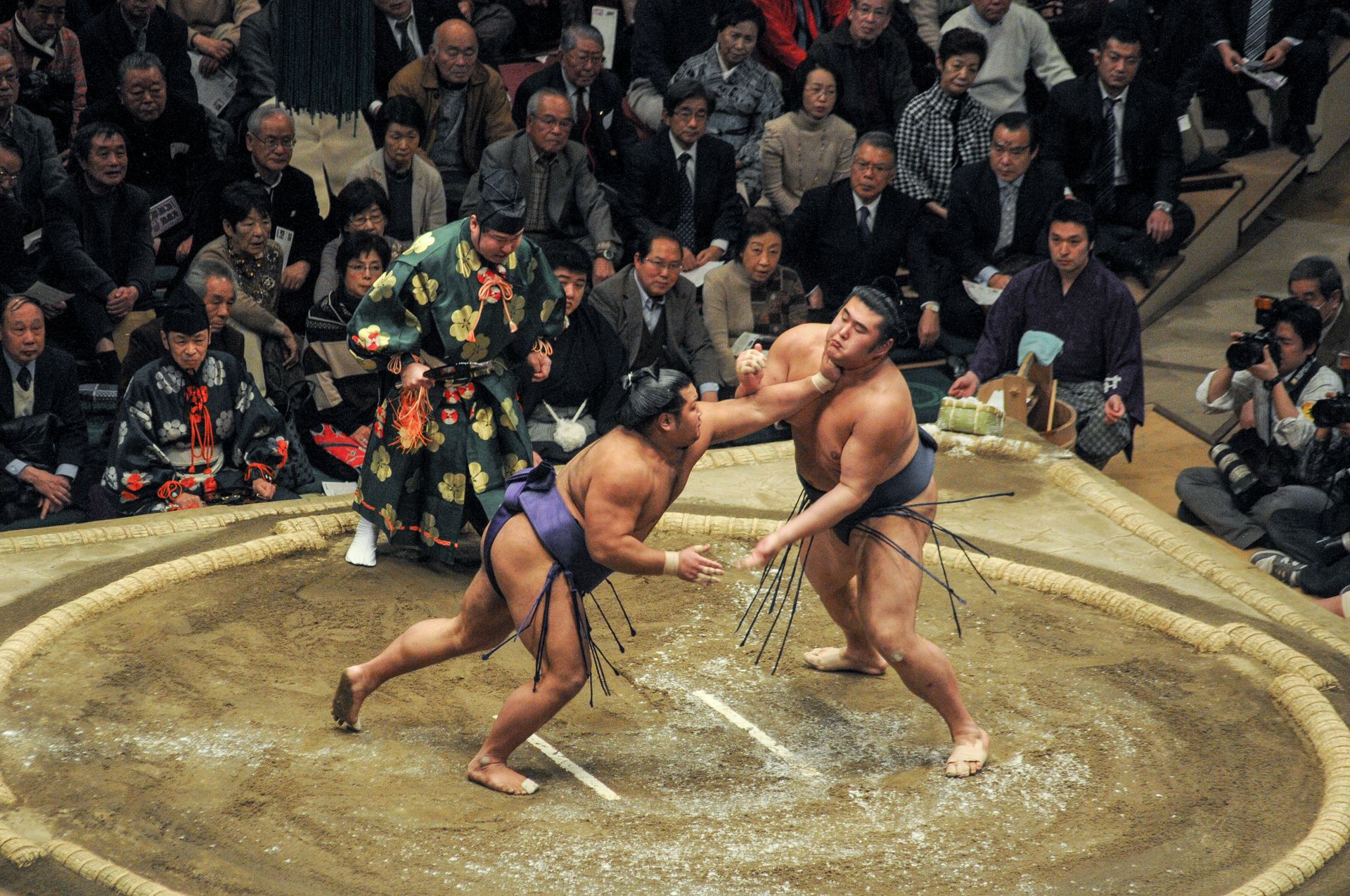
A basho day is a slow build with a fast finish, and knowing its rhythm tells you when to tune in. Doors at the Kokusai Center open at 8.45am on the first twelve days, later on the last three. The morning belongs to the lower divisions, young wrestlers in front of a thin crowd. Juryo takes the ring in the early afternoon. Then come the ceremonies that television never cuts: the top division's ring entering ceremony, dohyo iri, the wrestlers circling the clay in embroidered aprons, and the yokozuna's separate, slower ceremony, the grand champion stamping the evil out of the ring with two attendants at his side. The top division bouts run from about 4pm, building rank by rank to the final bout of the day at around 6pm, and a bow twirling ceremony closes the hall. A single bout can last four seconds or four minutes; the four minutes of salt throwing, crouching and staring that precede it are not filler, they are the contest of nerve, and once you start reading them the short bouts stop feeling short.
Watching it, properly
Inside Japan this is easy, and free. NHK, the national broadcaster, shows the top division live every afternoon of the tournament, which means the television in your hotel room, and in a good number of Hakata's bars, cafes and restaurant waiting areas, will be carrying the bouts from mid afternoon whether anyone planned it or not. Pick a counter seat somewhere showing the coverage, order early, and watch the last hour with the room: a Fukuoka crowd following a close yusho race is its own spectacle, and regulars will happily explain a throw if you ask at the right moment, which is between bouts, never during one.
Outside Japan, or on a screen of your own, NHK World Japan is the route. Its Grand Sumo Live coverage runs on days one, eight, fourteen and fifteen, Sunday 8, Sunday 15, Saturday 21 and Sunday 22 November, starting at 5.10pm Japan time on the first three of those days and 4.30pm on the final day, with the day's closing bouts and the championship finish live in English. On the other days its highlights programme condenses the top division into a watchable half hour. Between broadcasts, the association's own site posts every result, so a morning coffee check of the standings becomes a habit by day four. If you follow only four afternoons in full, make it those four live days, and clear the final Sunday completely: senshuraku is when the cup is lifted, and it is the best television the sport makes.
Seeing wrestlers around Hakata
For the fortnight of the tournament the stables, the heya that house and train the wrestlers, base themselves in and around Fukuoka, and the city changes texture. Wrestlers in yukata, hair in the topknot, are an ordinary sight on the streets around Hakata Station and on the walk toward the Kokusai Center; the top men arrive at the hall through the early afternoon, and fans gather on the public pavement outside to watch them walk in, which you can do without a ticket and without troubling anyone. Junior wrestlers run the morning errands, shop for the stable and move around the neighbourhoods in groups. The etiquette is simple and locals observe it themselves: do not block a wrestler's path, never touch the topknot or the belt, and ask before a photograph rather than stepping in front of one. Watch, enjoy, and let them pass. A stable's temporary home is a workplace and a dormitory, not an attraction, so admire from the street and do not go looking for morning practice viewings that nobody has invited you to.
The grounded way to spend one of these days is with a local host who builds the route around the basho city: Hakata's old town and Kushida Shrine in the morning, the streets around the hall as the wrestlers arrive, and the yatai stalls after the final bout. The private tour wired on our Fukuoka attractions page is personalised, so the route is set with your host in advance; tell them the sumo is the point.
Book a Fukuoka private tour with a localvia Viator · affiliate link
Eat like a stable: chanko
Every sumo stable has one wrestler-cook roster and one great communal pot: chanko, the hearty stew that fuels the heya, built on a seasoned broth and loaded with meat, fish, tofu and vegetables in whatever combination the stable favours. During the Kyushu Basho, Hakata's restaurants lean into it, and a chanko lunch is the most sumo meal a non ticket holder can eat: order the pot for the table, not a bowl each, and pace yourself, because the broth at the end, often finished with noodles or rice, is the point the wrestlers themselves would tell you about. Pair it with the rest of the city's food life, the tonkotsu ramen and the yatai counters covered in our Fukuoka weekend guide, and the tournament fortnight eats very well. Our Fukuoka attractions page carries the full list of what else to book around the bouts.
The calendar beyond Kyushu
If this fortnight converts you, plan the next one properly, because the sale is the whole game. Professional sumo runs six tournaments a year, each fifteen days from a Sunday to a Sunday. In 2027: Tokyo from Sunday 10 to Sunday 24 January, Osaka from Sunday 14 to Sunday 28 March, Tokyo again from Sunday 9 to Sunday 23 May, Nagoya from Sunday 11 to Sunday 25 July, Tokyo from Sunday 12 to Sunday 26 September, and Fukuoka again from Sunday 14 to Sunday 28 November. The January tournament in Tokyo is the next chance, and its general sale opens on Saturday 5 December 2026 at the association's official ticket service: set up the account in advance, be online when the sale opens, and take a weekday if the weekends go first, as they usually do. Weekday sumo, a half full hall and the same top division at 4pm, is no consolation prize.
Sleep in Hakata if the tournament rhythm is your day: the station district puts the hall, the bars showing NHK and the yatai rows of Nakasu within an easy walk or one subway stop, and Tenjin is ten minutes the other way for shopping and dinner. Base there for the fortnight's best days and the city does the rest.
Stay in Fukuokavia Trip.com · affiliate link
More reading on the articles page, or go straight to the events calendar.