
This weekend · Fri 06 Nov 2026
Fukuoka in a weekend: sumo opens, the marathon runs, and the city that eats standing up
Fukuoka is the easiest big city weekend in Japan, and the weekend of 7 and 8 November 2026 is its best of the autumn: the Kyushu sumo tournament opens, the city marathon runs to the sea, a hit musical opens at Hakataza, and the winter illuminations are already lit. Two days, arranged in the order the city itself would arrange them, ending at the yatai stalls.
Most visitors meet Fukuoka for an hour, changing trains at Hakata on the way somewhere else. That is a waste of Japan's most liveable big city. Fukuoka is compact enough to cross on foot, old enough to have a guardian shrine and a castle ruin at its centre, and serious about food in a way that makes Tokyo look distracted. It also, this month, puts on the best weekend of its year. If you go for one weekend in November, go for this one: Saturday 7 and Sunday 8 November 2026, when the sumo arrives, the marathon runs, and the city lights its station plaza for winter.
Why this weekend
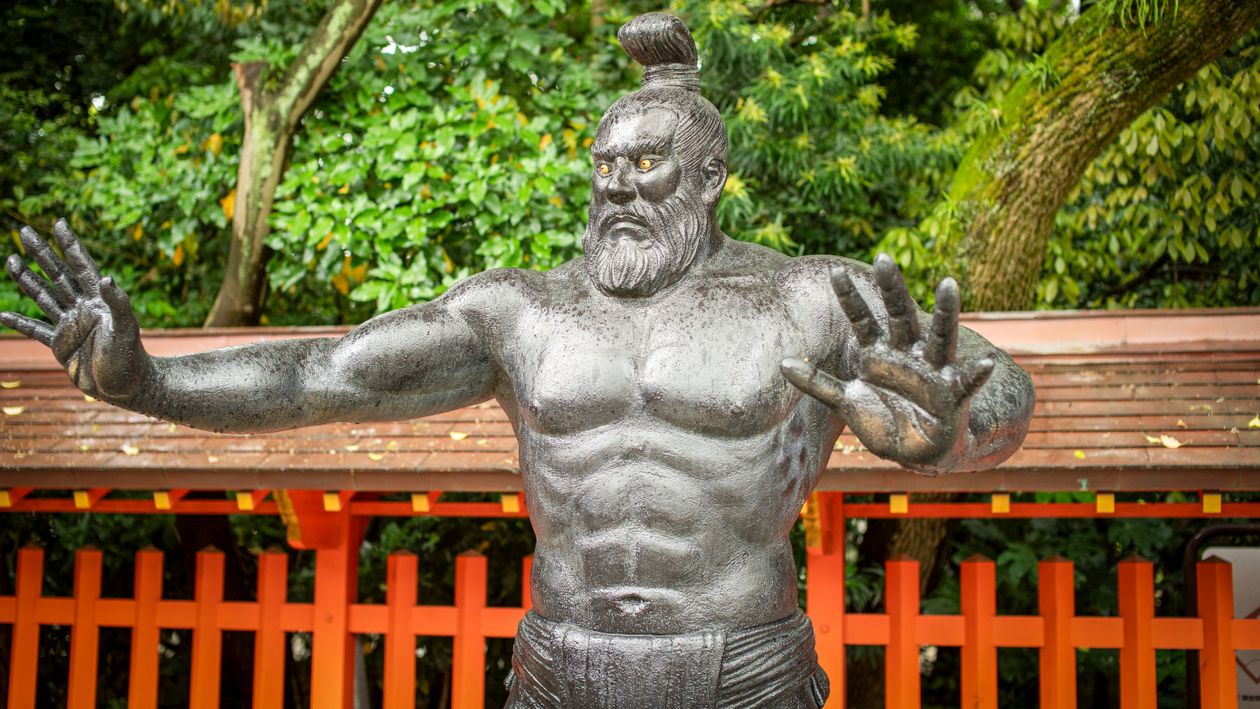
Three of the city's biggest dates land together. The Kyushu Grand Sumo Tournament opens at the Fukuoka Kokusai Center on Sunday 8 November and runs for fifteen days to Sunday 22 November: the last grand tournament of the year, and the only one held in Kyushu. The Fukuoka Marathon runs the same Sunday morning, 13,000 runners going point to point from Tenjin in the city centre west to a coastal finish in Itoshima. And at Hakataza, the city's grand theatre, Musical SPY x FAMILY 2 opens on Saturday 7 November. Over all of it, Hikari no Machi Hakata, the illumination that fills the JR Hakata Station plaza with some 160,000 bulbs, has been lit since 3 November and runs to 11 January.
One honest warning before the itinerary: sumo tickets for all fifteen days sold out through the Japan Sumo Association's official sale, and the association sells no tickets at the venue on the day. If you hold tickets, Sunday is yours. If you do not, the tournament still changes the city for a fortnight: wrestlers in yukata on the streets around Hakata, stable banners, chanko restaurants full at lunch. Treat it as atmosphere, watch the top division bouts on television in the late afternoon like everyone else, and spend the money you saved on the rest of this list.
Saturday morning: Hakata old town and the shrine
Start where the city started. Kushida Shrine, a short walk from Hakata Station, is Hakata's guardian shrine and the home of the Hakata Gion Yamakasa festival; one of its enormous decorated floats stands on display in the grounds all year, so you get the festival's scale without July's crowds. From there the old town lanes run to Tochoji Temple and its great wooden Buddha, and back toward the station for lunch. Hakata ramen is the obvious order and the correct one: a milky tonkotsu broth, thin noodles, and the kaedama system that brings you a second helping of noodles for the same bowl. Eat it now, because tonight belongs to the stalls.
Saturday afternoon: Ohori Park, the castle and the art museum
Cross the centre to the city's green west side. Ohori Park is a broad pond park built on the old castle moat, with a two kilometre path around the water, boats to rent, and islands joined by stone bridges. On its south shore sits the Fukuoka Art Museum, where the Yoshida Hiroshi retrospective, marking 150 years since the great woodblock traveller's birth, runs to 20 December. Above the park, the Fukuoka Castle Ruins in Maizuru Park keep the massive stone walls of what was Kyushu's largest castle; the view from the Tenshudai stone base takes in the park, the city and the bay. Everything in this paragraph except the museum is free, and the whole loop is an easy afternoon.
Saturday night: the yatai
Fukuoka's gift to Japanese food culture is the yatai, the open air food stall: a counter for eight or ten, a canvas roof, one cook, and a menu of ramen, grilled skewers, oden and beer. Around a hundred stalls set up at dusk across the city, with the famous rows along the river in Nakasu and clusters in Tenjin and Nagahama. The rules are simple and worth knowing: stalls are small, so do not linger for hours over one drink, order food with your drink, and expect to share the counter with strangers, which is the point. Go to Nakasu first for the postcard row reflected in the river, then walk to a second stall for the dish the first one does not do. Nobody regrets a second stall.
Sunday: marathon morning, then the bay side
Be in Tenjin early on Sunday to watch the marathon start at 8.20am, then follow the day west as the runners do, at sightseeing pace. The Momochi seaside district holds the city's modern landmarks in one walkable sweep: Fukuoka Tower, at 234 metres the tallest seaside tower in Japan, with its observation deck at 123 metres open 9.30am to 10pm; the MIZUHO PayPay Dome, home of the SoftBank Hawks; and beside the dome, BOSS E-ZO Fukuoka, the entertainment building whose fifth floor holds teamLab Forest. The teamLab here is a forest of light you move through and partly climb, built around catching and releasing digital animals; it opens at 10am on weekends, an hour earlier than on weekdays, and timed tickets are the difference between walking in and queuing.
Book teamLab Forest ticketsvia Viator · affiliate link
The half day out: Dazaifu
If your weekend has a third morning, or the weather turns, take the train to Dazaifu, about thirty minutes from Tenjin. Dazaifu Tenmangu is the shrine of Tenjin, the god of learning, built over the grave of the exiled scholar Sugawara no Michizane: students come in their thousands to pray before exams, the approach street sells umegae mochi hot from the grill, and nearly 6,000 plum trees wait for February. Five minutes from the shrine, the Kyushu National Museum, one of only four national museums in Japan, is showing Himiko and Her Mirrors, its special exhibition on the shaman queen of early Japan and the bronze mirrors tied to her rule, to 11 January. Shrine and museum together are the strongest half day in the prefecture.
The simple way to do Dazaifu with the onsen towns beyond it is the day trip that strings the three together and brings you back to the city by evening.
Book the Yufuin, Beppu and Dazaifu day tripvia Viator · affiliate link
Getting around, and where to sleep
Fukuoka's airport is absurdly close: two subway stops, about five minutes, from Hakata Station. Inside the city, almost everything in this guide sits on or between the Kuko and Nanakuma subway lines. The one purchase worth making is the Fukuoka Tourist City Pass, a day of unlimited bus and subway travel with discounted entry at sights across the city; buy it for the Ohori and Momochi day and it earns its keep by the third ride.
Book the Fukuoka Tourist City Passvia KKday · affiliate link
Sleep in Hakata if the sumo, the station illuminations and an early train matter most; sleep in Tenjin if you want the yatai, the department stores and the marathon start on your doorstep. Either way you are ten minutes from the other.
Stay in Fukuokavia Trip.com · affiliate link
Our Fukuoka attractions page carries the full list, from Marine World aquarium on the sandbar to cycling Shikanoshima island, and the Fukuoka section of Japan What's On tracks the sumo results and the winter programme as the month goes on. Two days is enough to understand why people who come for a weekend start looking at return flights before they leave.
More reading on the articles page, or go straight to the events calendar.