
Guides · Tue 24 Nov 2026
Kyoto in winter: the quiet season, temple by temple
Between the last maple and the first plum blossom, Kyoto empties, cools and sharpens: gold pavilions under the year's best light, Zen gardens made for grey days, winter only openings of rooms that stay shut all year, and the outside chance of the city's most famous photograph, snow on gold. The winter circuit, temple by temple, with the shorter winter hours planned in rather than discovered.
Kyoto has two famous seasons and one good one. Spring brings the blossom crowds and autumn brings the maple crowds, and both bring a city performing itself at full volume. Winter, from December to February, is when Kyoto stops performing. The tour buses thin out, the school groups vanish, the light drops low and clean, and the temples go back to being what they were built as: cold, quiet rooms and gardens for contemplation, in a city that takes its winters seriously and heats its buildings barely at all. This is the season of the Zen garden, which was designed for exactly these grey, leafless days, and of the winter only special openings, when temples show rooms and treasures that stay closed the rest of the year. It is also the season of shorter hours and earlier last entries, and the visitor who plans for that, rather than discovering it at a closing gate, gets a better Kyoto than the blossom crowds ever see. Here is the circuit, temple by temple.
The northwest: gold, silver and the stone garden
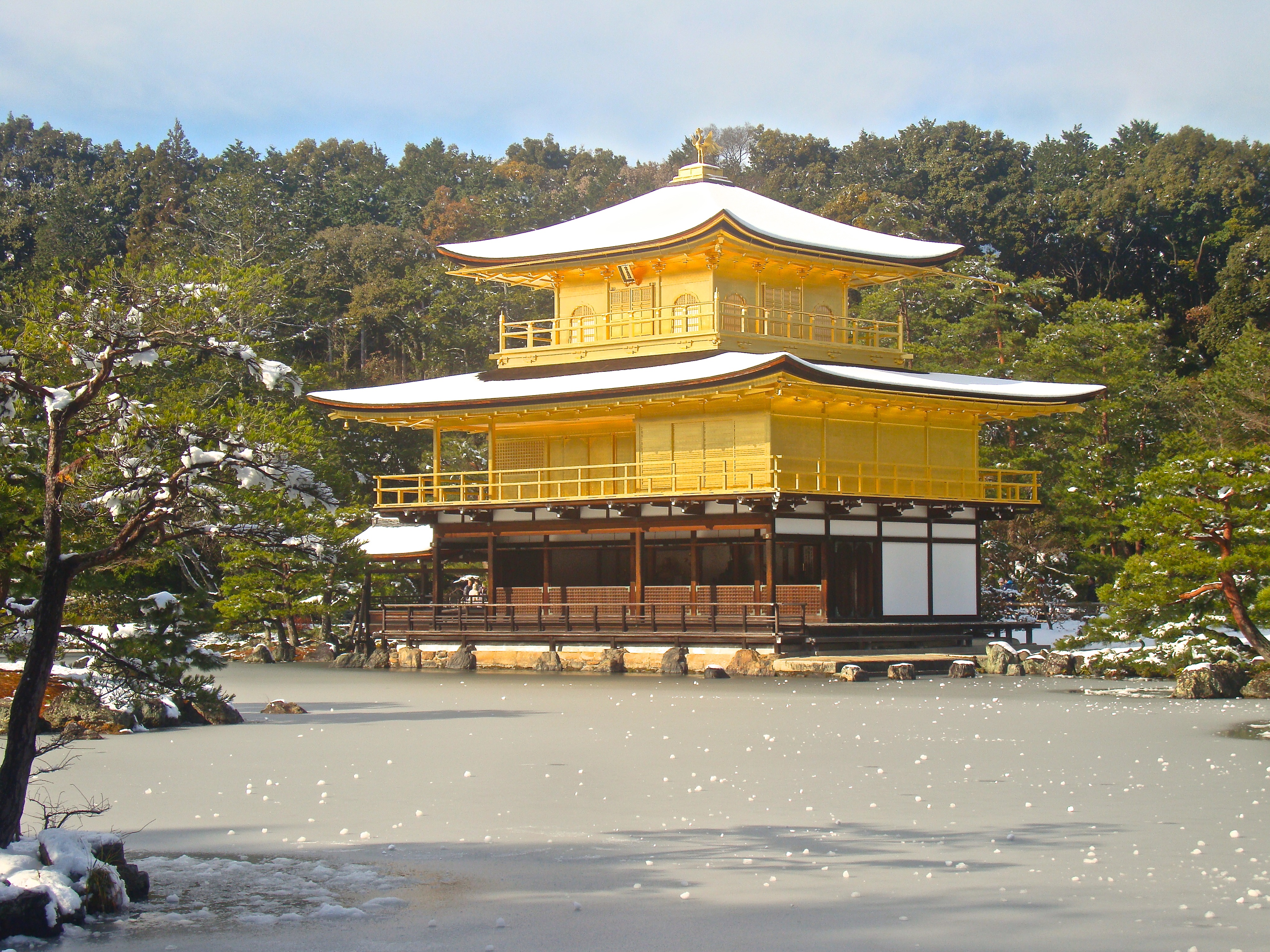
Start with the famous photograph and its honest odds. Kinkakuji, the Golden Pavilion, is at its best in winter light, gold leaf against dark pines in low sun, and at its legendary best under snow, when the pavilion, the pines and the pond all turn white except the building. Snow falls on Kyoto on a handful of days most winters and settles on the pavilion on fewer, so the snow photograph is a lottery prize, not an expectation: go for the winter light, which is reliable, and treat snow as the jackpot. The pavilion opens at 9am and closes at 5pm, and the winter tactic is the opening hour, when the pond is still and the path around it is walkable at your own pace.
A short ride east, Ryoan-ji holds the most famous Zen garden in the world, fifteen stones in raked gravel, and winter is its season by design: no foliage to soften it, no crowds to queue behind the viewing veranda, just the wall, the gravel and the stones in flat grey light. Note its winter clock, because it catches people: from December to February the garden opens at 8.30am rather than 8am. Pair it with its silver counterpart across the city on another morning. Ginkakuji, the Silver Pavilion that was never silvered, keeps winter hours of 9am to 4.30pm from December to the end of February, against 8.30am to 5pm in the longer months, and charges ¥1,000 (about US$6) for adults. Its sand garden and moss garden in winter quiet, at the end of the Philosopher's Path with the canal bare and the cafes warm, is the east side's best cold morning.
The east: the stage, the shrine that never closes, and Gion at dusk
Kiyomizu-dera, the great wooden stage above the eastern hills, opens at 6am all year and closes at 6pm through the winter months, and the 6am opening is the winter visitor's superpower: at dawn in January you can have the stage, the pagoda and the view over a waking city close to yourself, in air so cold the city below steams. The lanes below, Ninenzaka and Sannenzaka, are empty at that hour and full by ten, and both versions are worth seeing, in that order.
Fushimi Inari Taisha, the mountain of ten thousand torii gates south of the centre, has no gate hours at all: the shrine is open at all hours and charges nothing, and winter is when that fact becomes a strategy. The lower gate tunnels are busy in any season by day, but the upper mountain, an hour's climb through gates that thin as you rise, is a winter walk of real solitude, and a late afternoon start puts you at the summit crossroads for the city lights coming on, with the descent by lantern light. The shrine is five minutes from Kyoto Station on the JR Nara Line, which makes it the easiest early start or late finish in the city.
End the eastern days in Gion, where winter dusk is the point. The geiko district's preserved streets, Hanamikoji and the Shirakawa lane, are at their best in the blue hour, when the teahouses light their lanterns and the apprentices and geiko cross to their evening engagements. Walk it with a guide if the world of the teahouses is new to you; the etiquette, the history and the difference between looking and intruding are all easier to learn at walking pace than from a guidebook.
Book the Gion walking tourvia Viator · affiliate link
The west and the centre: Arashiyama emptied, and the shogun's castle
Arashiyama, the western district of the bamboo grove and the river gorge, suffers most from crowds in the famous seasons and recovers most completely in winter. The bamboo grove at 8am on a January weekday is a place again rather than a queue, Tenryu-ji, the great Zen temple at its heart, opens at 8.30am and closes at 5pm, and the gorge railway and the river walk below the mountains are cold, clear and quiet. This is the winter morning to pair with an onsen finish or a long lunch; Arashiyama in winter is a half day at a slow pace, not a checklist.
In the centre, Nijo Castle, the shogun's Kyoto residence with its nightingale floors, keeps the city's most businesslike hours and an early last entry, so give it a planned morning slot rather than an afternoon impulse. And across the winter, watch for the season's special openings: Kyoto runs a winter programme in which temples and cultural properties open rooms, gardens and treasures that are closed the rest of the year, for a limited run in the early months. The 2026 programme ran from 9 January to 18 March with admission at most venues around ¥800 (about US$5) for adults. The 2027 programme and its venue list are announced closer to the season, and the copy here claims nothing more specific than that pattern, but a winter trip should be built with a spare morning for it, because a room that opens for nine weeks a year is the definition of a winter only sight.
One more winter pleasure: the plum at the end of it
The season has a coda worth knowing if your trip falls late. Kyoto's winter ends not with cherry blossom but with plum, which flowers from late January into February, earlier, hardier and more fragrant than the famous blossom, and the city's plum viewing is a quiet rehearsal for spring without a fraction of its crowds. Kitano Tenmangu, the shrine in the northwest dedicated to the patron of learning, keeps the city's best known plum garden and opens it for the flowering weeks, with the great flea market on the 25th of each month filling the shrine grounds in the middle of it. A winter trip that ends with plum blossom opening in cold sunshine has seen the season turn, which is the most Kyoto ending a trip can have. Dates for the garden's opening follow the flowering and are announced by the shrine as it approaches, so check before you build a day around it.
The practical winter: hours, cold and order
Three winter rules organise the whole trip. First, the day is shorter at both ends: temples close at 4.30pm or 5pm, last entries run thirty to sixty minutes before that, and the correct winter shape is early starts and a hard stop for sightseeing by five, with the evenings given to Gion, to Pontocho's restaurant lane, and to being warm. Second, the cold is architectural: temple interiors are unheated, wooden floors are walked in socks or slippers, and a Kyoto temple day in January is colder inside than out. Thick socks are equipment, not comfort. Third, snow is a bonus with a protocol: if it falls overnight, go to Kinkakuji at opening, before the melt and before the word gets out, and let the rest of the day rearrange itself.
Stay in the centre, near the Shijo and Karasuma crossing, where the buses to every temple quarter start and the evening city is at the door.
Stay in Kyotovia Trip.com · affiliate link
Winter Kyoto is not the famous Kyoto, and that is the recommendation. The gold is still gold, the stones are still in the gravel, and you will have both largely to yourself. Our events calendar carries the winter openings and the season's festivals as they are announced.
More reading on the articles page, or go straight to the events calendar.
Noteworthy events direct to your inbox.
Get what’s noteworthy for the weekend and beyond every Wednesday in your inbox.