
Guides · Mon 23 Nov 2026
Kamakura in a day from Tokyo: the Great Buddha and the coast
An hour from Tokyo, a whole other Japan: the shogun's capital, a bronze Buddha who has sat outdoors for seven centuries, a bamboo grove temple, and a little green train running along the sea. The Kamakura day, in the order that works, with the pass maths done and the coast given its proper place at the end of the day.
Tokyo's day trips divide into the ones that show you a sight and the ones that show you a place. Kamakura is the second kind. For about a century and a half from the late twelfth century it was Japan's seat of government, the shogun's capital, and it still carries itself like a small city that once mattered enormously: great temples in the folds of wooded hills, a grand shrine at the top of a ceremonial avenue, a shopping street built for pilgrims, and, at the end of every westward street, the sea. Add the most famous statue in Japan, sitting outdoors where a tsunami put him five centuries ago, and a beloved little railway running along the coast, and you have the complete Tokyo day out. This guide runs it in the order that works: temples in the morning quiet, the Buddha before the crowds peak, the shrine and the shopping street in the middle, and the coast in the afternoon light.
Getting there, and the shape of the day
Kamakura is about an hour from Tokyo by JR. The Yokosuka Line runs direct from Tokyo Station and Shinagawa to Kamakura Station, and the Shonan Shinjuku Line serves it from the west side of the city. There are two stations that matter inside Kamakura itself. Kita Kamakura, one stop before the main station, is the quiet back door, set among temples in the hills. Kamakura Station is the front door, with the shrine avenue and the shopping street ahead of it and the Enoden, the little electric railway to the Buddha and the coast, at its side. The day in this guide starts at the back door and finishes at the sea, which means it runs downhill, in every sense, all day.
One money point before the sights. Inside Kamakura you will ride the Enoden, and Enoden sells a one day pass, the Noriorikun, at ¥800 (about US$5) for adults and ¥400 (about US$3) for children, covering unlimited rides on the whole line for the day. Whether it pays is arithmetic, not faith: single Enoden fares run from about ¥200 (about US$1) upward, so the pass earns its money from roughly the fourth ride. The day in this guide uses three Enoden rides, which means single tickets are marginally cheaper and the pass buys convenience and the freedom to hop off on impulse. Buy it if you are an impulse traveller. Skip it if you are not. Either way, decide with the numbers, not the brochure.
The morning temples: Engakuji and the bamboo grove
Get off at Kita Kamakura and start at Engakuji, one of the great Zen temples of the Kamakura school, founded in the thirteenth century and still a working monastery, its gate and halls climbing a wooded hillside a few minutes from the station. In the morning it is what Zen temples are supposed to be: raked gravel, maples, chanting if you are lucky, and almost nobody about. Give it the first hour of the day, while the tour buses are still loading in Tokyo.
From there the day crosses town to its second temple, and the crossing is part of the pleasure, through the back streets of a small city going about its morning. Hokoku-ji, in the eastern hills, is a modest temple with an immodest garden: a grove of thousands of bamboo culms, dense and green and cool, with a teahouse in it serving matcha at a counter facing the grove. It is a twenty minute stop, not a half day, and that is its charm. Kamakura does small and perfect very well, and the bamboo grove is the proof. Admission to the temple is ¥400 (about US$3), with the tea priced on top if you take it, and you should.
The Great Buddha, before the crowds
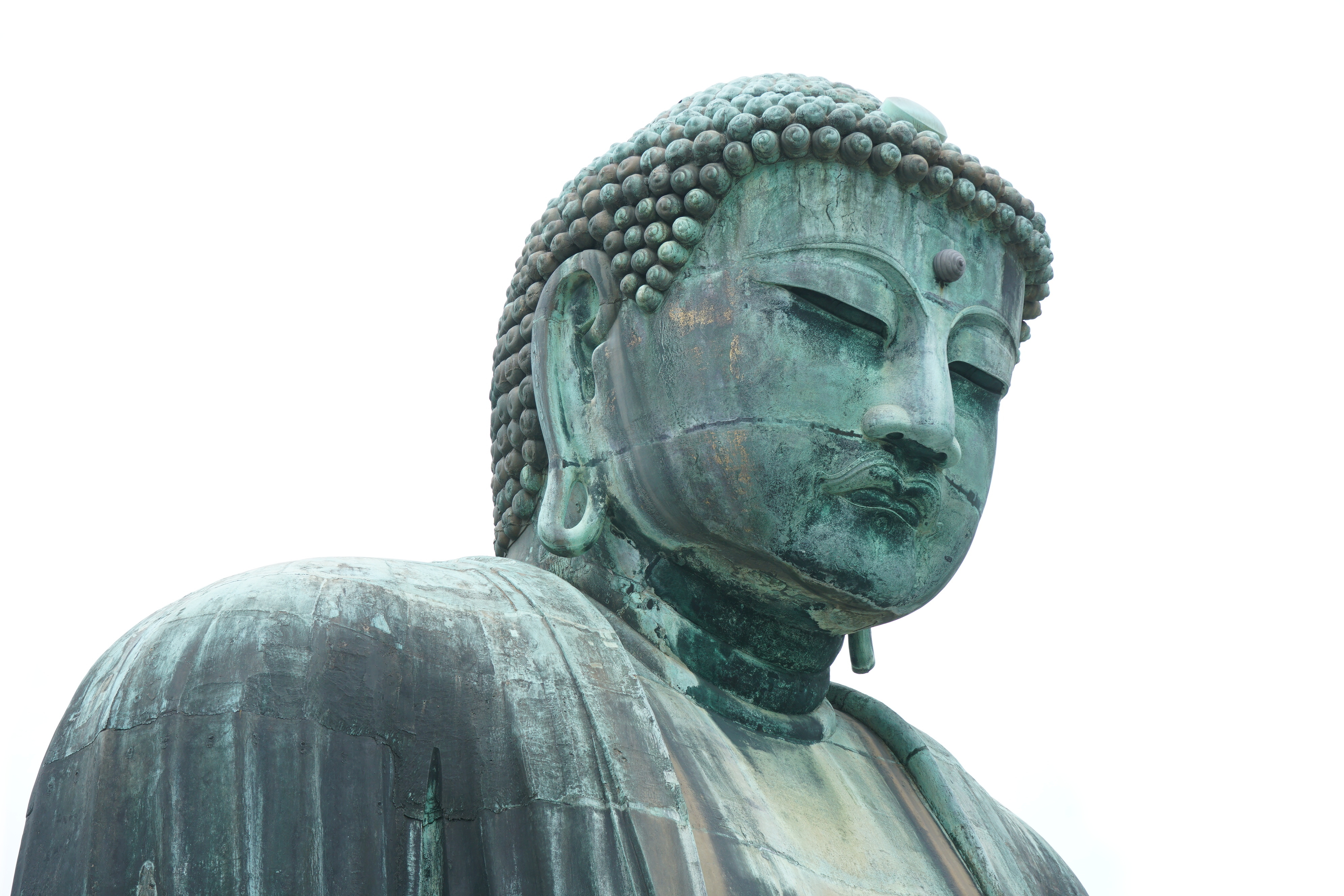
Ride the Enoden from Kamakura Station to Hase, three stops and about seven minutes, and walk the seven minutes up to Kotoku-in. The Great Buddha, the Kamakura Daibutsu, is a bronze Amida Buddha cast in the thirteenth century, 13.35 metres tall including his base and weighing about 121 tons, and he has sat in the open air since the great hall that housed him was washed away by a tsunami in the fifteenth century. Photographs flatten him. In person, the scale lands slowly: he is not the biggest Buddha in Japan, and he is the one everybody remembers, because the setting, a hollow in green hills with the sky for a roof, does what no hall could.
The temple grounds open from 8am to 5pm from October to March, and to 5.30pm from April to September, with last entry fifteen minutes before closing. Admission is ¥300 (about US$2) for adults and ¥150 (about US$1) for primary school children, and for ¥50 (about US$0.30) more you can step inside the statue itself, which is hollow, ribbed with bronze, and open from 8am to 4.30pm all year. Go inside. It takes two minutes and it converts the statue from an image into a piece of engineering. Timing matters here more than anywhere else in the day: the grounds fill from late morning, and a Buddha seen at 10am among school groups is a different experience from the same Buddha at 9am in the quiet. This is why the day starts early and why Hase comes before lunch.
Hase repays the extra half hour around the Buddha. Hasedera, the hillside temple a few minutes from the station, holds a great wooden Kannon, gardens that take the seasons seriously, and a terrace looking straight out over the bay. Its admission is ¥400 (about US$3) for adults. If the day has a flex point, it is here: Hasedera in full, or a longer coast afternoon. Choose on the day, by the weather.
The shrine, the avenue and lunch
Back on the Enoden to Kamakura Station for the city's ceremonial centre. Tsurugaoka Hachimangu, the great shrine of the shogunate, stands at the top of Wakamiya Oji, the raised avenue that runs from the station to the sea, built as the city's spine. The shrine grounds open early, at 6am, and run to 8pm, and the climb to the main hall up its broad stair is the one piece of theatre Kamakura asks of every visitor. Below the stair, Komachi-dori, the shopping street running parallel to the avenue, is where Kamakura eats: sweet shops, pickle shops, coffee stands and a hundred small restaurants in a street built for wandering. Lunch here, unhurried, is not a break in the day. It is one of its set pieces.
The coast, to finish
End the day the way the city points you: towards the water. Walk the avenue down to Yuigahama beach, the city's own stretch of sand, or ride the Enoden the other way along the coast, past the famous level crossing at Kamakurakokomae, where the train crosses the coast road with the sea and Enoshima island behind it, to Enoshima itself for the island shrine, the caves and the sunset. The Enoden is a single track local line that threads between houses and gardens and then suddenly runs along the sea wall, and the ride is an attraction in its own right, worth the fare on a clear afternoon for the view alone. From Enoshima, the way home changes: Fujisawa, two stops beyond, connects to the JR Tokaido Line and the Odakyu Line back to Tokyo, so the day can end as a loop rather than a retracing.
Sleep in Tokyo for this trip. Kamakura is a day out, not a move, and the early start is the whole game, so base near a station with a direct Kamakura train.
Stay in Tokyovia Trip.com · affiliate link
Start at the back door, end at the sea, and be at the Buddha before ten. Our events calendar carries Kamakura's festival days through the year, when this quiet city fills its streets and the day needs booking rather than planning.
More reading on the articles page, or go straight to the events calendar.
Noteworthy events direct to your inbox.
Get what’s noteworthy for the weekend and beyond every Wednesday in your inbox.